nptwrlogo


        NPT Web Site


Home Page


Current Events


energy CommitteeFebruary 1, 2012
Energy Group Meeting
Time To Be Announced


Assessment, Remediation and Redevelopment of Tribal Unit 45
(aka Richardson Saw Mill) Orofino, Idaho

This link will navigate you to the TU 45 History and Information Web Page Built and Designed for this Grant Project

Please follow this link for details. Public Participation

Please review the Public Presentation 01-25-12  and our Draft Proposal for Multi-purpose Grant prior to taking the following survey. The comment and survey period will be from 01-25-12 to 02-10-12.
Please follow this link to add your comments by taking our survey.


30 December 2011

Ta’c Meeywi to New Director

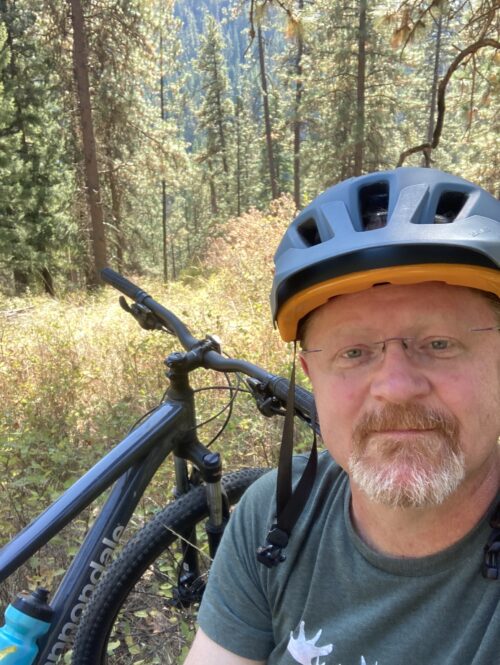
   Welcome to James Holt, a Nez Perce Tribal Member,
 who assumed the duties of Director of the Water
Resources division this week. James honorably served
our country as a United States Marine.  He is also a
graduate of the University of Idaho .   He began working
for the Nez Perce Tribe as a Communication Specialist
with the Information Systems division. He served as a
member of the Nez Perce Tribe Executive Committee.
James comes to us from the Nez Perce Tribe Wildlife
Program where he worked as a Conservation Botanist.


homepageheader


Mission Statement:

To manage, protect, develop, and restore the Nez Perce Tribe's surface and groundwater resources and watershed environments in the treaty-reserved homelands for the benefit, health, culture, and welfare of the tribal public.

The Nez Perce Tribe Water Resource Division was established in 1986 to establish a positive working relationship with local, county, state and federal agencies regarding our shared water resources and address the work conducted on the Snake River Basin Adjudication. The division was responsible for providing comments on proposed stream alterations, diversions, logging activities, water plans, management and future activities identified for the use of the Tribes through securing water claims.
Currently, the Tribe has a Water Resources Division (WRD) of fifteen environmental professionals, has a strong relationship with the United States Environmental Protection Agency (EPA) and other agencies and plays a key role in water resource management in the northwest.
The Nez Perce Tribe is currently working with the EPA to adopt water quality standards for the Reservation. The current programs within the division are:Summer 09

tWater Quality
 lWetlands
bNonpoint Source Pollution
bGround Water Protection
       Brownfields
       LUST
       HERT   
bUtility Services and Solid Waste Management
bEconomic Development Support
bCommunication & Outreach
bEnergy Efficiency & Conservation


Summer 09 Boats
The Nez Perce Reservation covers approximately 770,483 acres in north central Idaho, just east of the City of Lewiston, and has shared ownership among tribal, private, state and federal entities. The Nez Perce Reservation occupies a large portion of the Clearwater River subbasin, which is a major tributary of the Snake River. The Clearwater River flows approximately 70 miles within the Nez Perce Reservation and, with minor exceptions, the watersheds of the Reservation drain into the Clearwater River. Over 2,300 stream miles are located within the Reservation boundaries, of which approximately 15% are classified as perennial streams. Many of the streams within the Nez Perce Reservation historically supported substantial runs of anadromous salmonids. Fish once constituted a major food source to the Nez Perce people, and salmon remain an integral part of the Nez Perce culture.

The Nez Perce Tribe’s Water Resources Division is responsible for assuring that Reservation waters are drinkable, fishable and swimmable, as well as being suitable for cultural and ceremonial uses.


Nez Perce Reservation

 The Nez Perce Reservation is located in north central Idaho. Reservation boundaries overlap portions of five counties (Nez Perce, Lewis, Idaho, Clearwater, and a small portion of Latah), and consists of 750,000 acres
w i t h a n o n r e s e r v a t i o n population of approximately 28,000. There are many small  incorporated and unincorporated communities scattered throughout the reservation who have Nez  Perce and other Native American children who reside within the reservation boundaries or receive their education here.


Water Quality
Water quality and quantity have important cultural and economic significance for the Nez Perce Tribe. The
mission of the WRD is to “provide a foundation for management of the water rights secured by the Treaties of 1855 and 1863, and for monitoring the quality of water resources vital to the long-term sustainability of the Nez Perce Tribe and its heirs” (Nez Perce Tribe Water Resources Division Plan of Work 2005). Long-term viability of this resource depends on the development of comprehensive management programs for watersheds located on the reservation and ceded lands. The goals of the WRD surface water program quality monitoring program are to:

• Implement tribal water quality policies and regulation on a watershed scale to protect, preserve, and
   enhance water qality.
• Conduct research that supports the implementation of water quality management goals.
• Implement tribal programs, policies, and regulations to protect surface water quality, including
   management practices that prevent pollutants from entering surface water.
• Maintain, enhance, and restore wetland functions and values.
• Protect off-reservation water resources.
• Enhance protection of tribal water resources through coordination and consultation.

Wetlands
The Wetland Program has performed inventories and functional assessments of wetlands on the Reservation over the past seven years. Detailed information on wetland plants, soils, hydrology, land use, wildlife habitat, and more was gathered in 294 wetlands and entered into a database. Wetland condition was documented with photos, and plant specimens were collected for reference. GPS maps of each wetland were incorporated into a GIS coverage and linked to photos.
The next step in developing the Tribe’s Wetland Program is monitoring of water quality and biological
indicator species (amphibians and aquatic macroinvertebrates) in selected wetlands. Monitoring equipment for the 2010 field season is currently being installed in 12 wetlands.

Nonpoint source
Nonpoint source (NPS) pollution is the leading cause of water quality problems in the United States. NPS
pollution can include:
• Excess fertilizers, herbicides and insecticides from agricultural lands and residential areas.
• Oil, grease and toxic chemicals from urban runoff and energy production.
• Sediment from improperly managed construction sites, crop and forest lands, and eroding stream banks.
• Salt from irrigation practices and acid drainage from abandoned mines.
• Bacteria and nutrients from livestock, pet wastes and faulty septic systems.
• Atmospheric deposition and hydromodification.
The goal of the NPS Management Program is to reduce NPS pollution on the Nez Perce Reservation, restore and maintain degraded systems/habitats, preserve natural ecosystems, and educate landowners and the general public. To date, the program has fenced over 100 miles of stream, planted several hundred miles of riparian vegetation, assisted landowners in no-till farming practices, obliterated or repaired roads that were negatively impacting water quality and helped to install off-site watering structures for livestock.

wsl Follow this link to the map and listings of the watersheds in our area

Groundwater
The Groundwater Program’s mission is to protect high quality groundwater from degradation and to restore
contaminated groundwater to beneficial use. High quality groundwater on the Nez Perce Reservation provides nearly 100% of the potable water supplies for the Nez Perce People. The Lapwai Valley Aquifer is a portion of the federally designated Lewiston Sole Source Aquifer and scientific studies have documented that streams and groundwater are hydrologically connected.


Brownfields
Brownfields are real property, the expansion, redevelopment, or reuse of which may be complicated
by the presence or potential presence of a hazardous substance, pollutant, or contaminant. This program
is funded by CERCLA 128(a)/ Brownfield’s Tribal Response Program, and includes:

• Conducting timely survey and inventory of brownfield sites,
• Providing oversight and enforcement authorities,
• Creating meaningful opportunities for public participation,
• Authorizing cleanup approval and verification that a cleanup is complete, and
• Establishing a public record documenting the work conducted in the previous year and the planned work
  for the current year.

Leaking Underground Storage Tanks (LUST’s)
The Groundwater Program’s goals are to cleanup leaking underground storage tank (LUST) sites to
restore and protect groundwater resources and create a safe environment for those who live or work around these sites. This program is funded under the Resource Conservation Recovery Act (RCRA) and includes:

LUST prevention, and
LUST assessment and cleanup.

Hazardous Environmental Response Team (HERT)
Water Resources is developing the capacity to assist Idaho Department of Homeland Security in
responding and containing major petroleum and chemical spills or independently remediating smaller
spills within the scope of our ability.

Communication & Outreach
The Communications Specialist is to focus on “special projects” and securing funding for those projects.
Our current focus is Lead Poisoning Outreach and Education and our application through the EPA Environmental Justice Program.
The Communication Specialist assists Water Resources programs in community relations, original written
materials, publication and distribution, researching outreach, planning and implementation needs, preparing reports and performing professional and community outreach and environmental education work to/with tribal and non-tribal agencies and public. Participation on the Nez Perce Tribe Environmental Education Committee and other environmental groups are supported.


Utilities & Solid Waste Program
The purpose of the Tribal Utilities Services is to ensure the well being of the Tribe’s water, wastewater,
solid waste and energy systems through tribal capacity development and future planning. The Tribal Utilities also helps to support the development of a Utility Organization and provide essential environmental services to Tribal residents on the reservation.
The Utility Program operates and maintains three water systems (North Lapwai, South Lapwai and Kamiah) and two sewer systems (Kamiah and North Lapwai) for the Nez Perce Tribe. Our goal is to provide clean potable water for our customers as well as maintain a reasonable rate structure that our customers can afford. The Tribal Utilities and Indian Health Services work together to assist with private tribal homes within the reservation that may have any problems with their wells and septic systems.
Programs include clean-ups of refuse waste along side roads, minimize waste in illegal dumps, deter illegal
dumping, provide recycling to Tribal offices and the community, and provide updates on identifying wastes that can be diverted from the household waste. Solid Waste Management is necessary for programs to keep communities cleaner and improve health.

Energy Efficiency & Conservation
Environmental impacts from energy production and usage is an important issue for the Nez Perce Tribe and
the US. It is critical to become more conservation minded and use more energy efficient technologies in Tribal facilities and homes to help address the problems associated with our energy use.
Goals of the energy efficiency and conservation program:

• Work with area energy suppliers to identify areas for improving energy efficiency in Tribal facilities and
   homes.
• Reduce energy use in Tribal buildings. (Replace lighting, heat ventilation and cooling systems, add
   insulation and replacing windows as needed.)
• Work with consultants to facilitate a comprehensive strategic energy plan with leadership, tribal
   programs, and community members involved in the planning process.
• Assess renewable technologies to offset energy use and become more self sufficient with our energy
   needs.
   Add solar technologies to Tribal facilities
• Provide education and outreach to communities and resources on energy efficiency and conservation
   opportunities.  

Reducing our energy footprint benefits the salmon and other aquatic species which have been effected by large hydro facilities. With energy efficiency and conservation efforts we have the potential to affect positive change in the northwest and with these efforts there is an instant payback with reduced energy costs.

Link to our conservation partners


.


Nez Perce Tribe Water Resources
Division Est. 1985 .
All rights to information on this site reserved.
Revised: January 27, 2012 .